HOUSTON – (Realty News Report) – Gerald D. Hines, the founder of Houston-based Hines, a global real estate firm, has died peacefully at home at the age of 95.
Over his long career, Hines was responsible for developing The Galleria in Houston, the architectural breakthrough Pennzoil Place, and many notable skyscrapers, hotels, residential projects, retail plazas featuring public art, medical towers, industrial facilities, master-planned communities, and other significant developments around the world.
Arriving in Houston in the 1940s with an engineering degree from Purdue University and his ever-present slide rule, Hines lived at the YMCA during his early years in the city.
A Boy Sees a Skyscraper
As a child, Gerald D. Hines visited Chicago and saw the Wrigley Building on the skyline. “Someday, I’d like to build one of those,” he told himself. That childhood aspiration became a life’s work—creating environments, workplaces, plazas, and homes that have touched millions.
Hines’ buildings now punctuate skylines worldwide. Equally important, he changed the way skyscrapers were designed and developed by proving that bold, memorable architecture—created by outstanding architects—could also be commercially successful.
The son of an electrician and a schoolteacher, Gerald Douglas Hines was born in Gary, Indiana on August 15, 1925.

Mr. Hines died at his family home in Connecticut last Sunday, a week after celebrating his ninety-fifth birthday. His passing was announced by his son, Jeffrey C. Hines, who has served as President of the company and who now becomes Chairman and CEO of Hines.
Widely regarded and frequently honored as a visionary in commercial real estate, Gerald D. Hines transformed a one-man entrepreneurial startup launched in Houston in 1957 into an international firm known for developing some of the world’s most recognizable architectural landmarks across five continents. Today Hines employs more than 4,800 people and operates in 225 cities across 25 countries.
Hines championed the practice of hiring leading architects to create exceptional design that attracted major corporate tenants. That approach revolutionized the building industry and improved the quality of commercial architecture worldwide. Over his career he collaborated with distinguished architects including Lord Norman Foster; Bruce Graham and David M. Childs of SOM; Gyo Obata; Philip Johnson and John Burgee; I.M. Pei and Harry N. Cobb; Cesar Pelli; Kevin Roche; Robert A.M. Stern; A. Eugene Kohn and William E. Pedersen; Charles W. Moore; Frank O. Gehry; Jon Pickard; Jean Nouvel; and others.
“While he created many iconic and impactful developments, it is the Hines organization that was his greatest achievement. He built the premier global real estate brand,” said Houston developer Jonathan H. Brinsden, CEO of Midway. “In terms of an industry icon, he was the icon. I had the good fortune to meet with him several times and was always struck by his graciousness, openness, and continued passion for the business.”
The Hines firm has delivered more than 907 projects worldwide, including 100 buildings over 25 stories and the tallest office towers in Texas, Kentucky, New Jersey, Oklahoma, and Italy. After elevating Houston’s built environment with projects that combined art, design, and sustainable function, Hines expanded across the United States, establishing significant local offices in New York, San Francisco, Atlanta, and Chicago. From 1996 to 2010 he based himself in London after transferring day-to-day operations to his son Jeff in 1990, expanding the company’s presence across Western and Eastern Europe and into Asia in the mid-1990s.
Notable Hines developments include 53rd at Third (the Lipstick Building) in New York; 101 California in San Francisco; One Ninety One Peachtree in Atlanta; Three First National Plaza in Chicago; Five Hundred Boylston in Boston; DZ Bank in Berlin; Porta Nuova in Milan; and the EDF Tower in Paris.
In Houston, Hines developed many landmarks such as One Shell Plaza (now 910 Louisiana), The Galleria, Pennzoil Place, Bank of America Center, Williams Tower (still referred to by some Houstonians as the Transco Tower), and the 75-story JPMorgan Chase Tower, the tallest building in Texas.
In 2007, architect David Childs, chairman emeritus of Skidmore, Owings & Merrill, praised Hines’ commitment to architecture and urbanism, noting that his concern for building quality extended beyond individual sites to benefit entire communities.
Mr. Hines was also a leader in sustainability, receiving recognition from the U.S. Environmental Protection Agency, the U.S. Green Building Council, Global Green USA, and similar organizations across South America, Europe, and Asia.
Mr. Hines valued public spaces—parks, water features, art, and other open amenities—as essential extensions of commercial projects.
“Beyond his significant career and pioneering contributions to architecture, sustainability, and the built environment, Dad felt his greatest achievement was the team of dedicated professionals who have, and will continue to, carry on his legacy of peerless quality, integrity and innovation,” stated Jeffrey C. Hines, Chairman and CEO of Hines.
Two Houston High-Rises Under Construction
The Hines organization is currently constructing a 47-story office tower and a 46-story apartment tower in downtown Houston, along with more than 160 other developments underway around the world.
Gerald Hines received honorary doctorates from both Purdue University and the University of Houston, regularly lectured at universities, and was an esteemed speaker at industry events. He received the Urban Land Institute’s Prize for Visionaries in Urban Development in 2002 and was an honorary Fellow of the American Institute of Architects. His name endures in institutions such as the Gerald D. Hines College of Architecture at the University of Houston and the Urban Land Institute’s Gerald D. Hines Student Urban Design Competition, which led to the redevelopment of Houston’s historic Post Office on Franklin Street.
Mr. Hines is survived by his wife, Barbara, four children, 15 grandchildren, and a great-grandson. He will be laid to rest in a private family ceremony in Aspen, Colorado, and a public celebration of his life will be scheduled at a later date.
Hines, Houston and the Built Environment
As 1970 approached, Hines took on two major projects almost simultaneously: The Galleria and the One Shell Plaza office tower. One Shell Plaza, a 50-story building now called 910 Louisiana, was far taller than anything he had previously attempted. Taking on both projects at once proved risky, but both achieved acclaim and commercial success.
The Galleria—a pioneering three-level enclosed mall and mixed-use development—became an instant local favorite and an international draw, hosting high-end retailers that recorded significant sales.
Adjacent to The Galleria, Hines developed the 64-story Transco Tower (later renamed Williams Tower) and created the Water Wall, a dramatic 64-foot curved fountain that remains a popular public gathering spot surrounded by a lawn where families picnic. The surrounding three-acre park now bears Hines’ name.
When Hines began assembling land in the 1960s, the area around The Galleria was not heavily developed despite being intersected by Westheimer Road. After The Galleria opened, other developers followed, creating hotels, retail, multifamily housing, and office towers. Today the Galleria/Uptown Houston area contains 26 million square feet of office space, 38 hotels, and hundreds of stores and restaurants—more office space than the downtowns of many cities. In effect, Hines planted a tree and a forest grew.
“In Uptown, Mr. Hines went beyond single-building achievements to become the catalyst for creating community,” said John R. Breeding, president of the Uptown Houston organization. “Gerald D. Hines brought innovation, excellence in design, construction efficiency, and sustainability to the international real estate investment and development world as perhaps no builder of our time has done. No city bears his signature as clearly as does Houston, and in Houston the Uptown/Galleria area is his grandest triumph.”
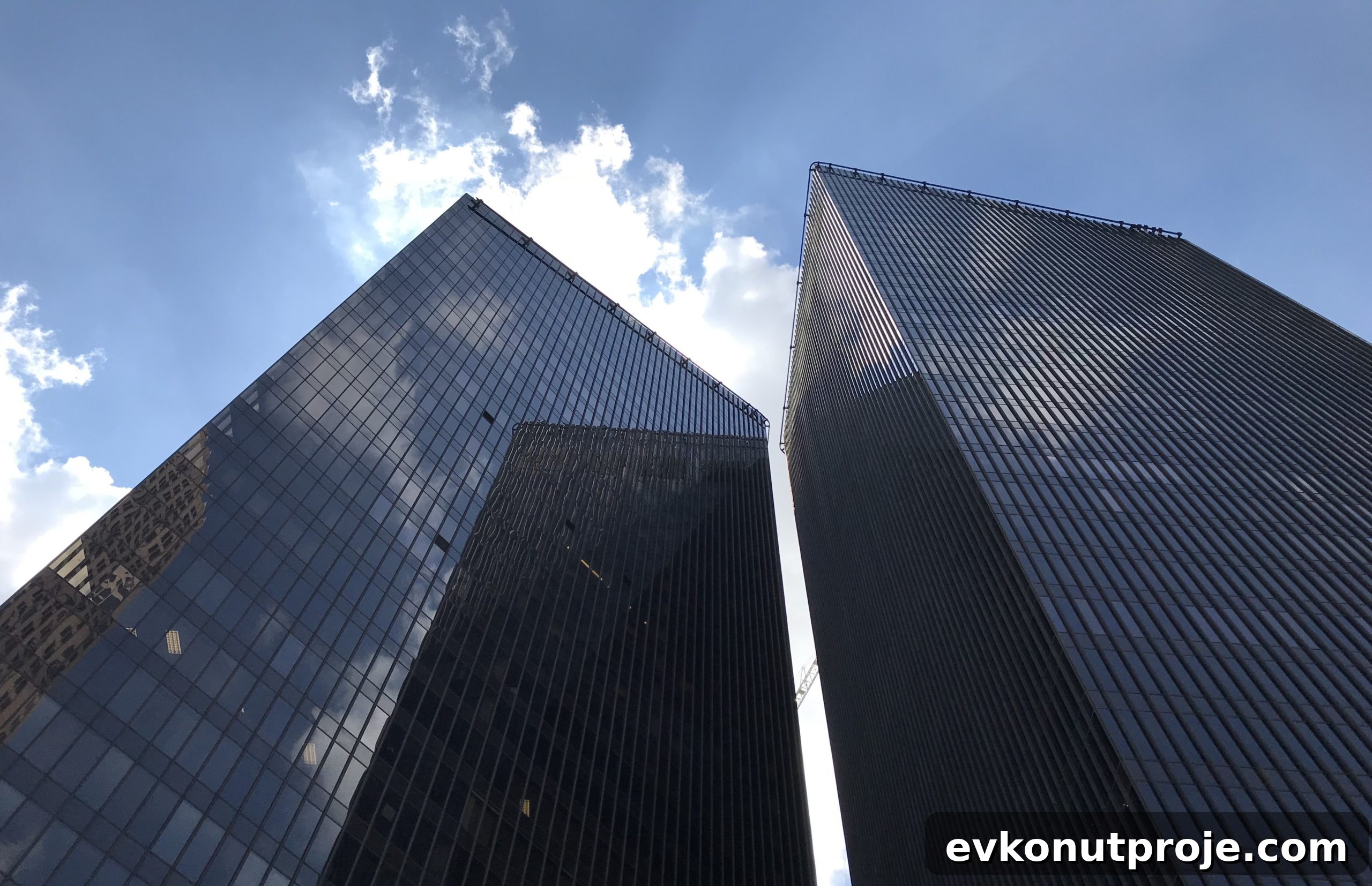
The Transco/Williams Tower followed Pennzoil Place as another signature Hines project. Pennzoil Place, completed in 1975, broke the mold of architectural sameness with two trapezoidal towers clad in dark glass. Standing 523 feet tall, the 36-story building was named Building of the Decade by New York Times critic Ada Louise Huxtable and attracted attention from artists such as Andy Warhol.
Pennzoil Place encouraged other developers to take architectural risks, inspiring greater creativity in skylines—especially Houston’s, which became a canvas for Hines’ vision.
“I think I’ve always enjoyed building whether it was carpentry or model airplanes,” Mr. Hines said in 2000 when honored by the National Building Museum in Washington, D.C. “That has always been a creative part of my life and I needed to express it in another way when I became an adult.”
At that same ceremony, former President George H. W. Bush praised Hines, offering words that reflect Hines’ lasting influence: “Gerald Hines envisioned Houston as a city of beautiful buildings.”
Aug. 25, 2020 Realty News Report Copyright 2020
Caption: Pennzoil Place. Photo credit: Ralph Bivins, Realty News Report. Copyright 2020
File: Developer Gerald Hines passes